Tech Brief: AI Reasoning Advances Spark Safety Concerns Amid Regulatory Pressure
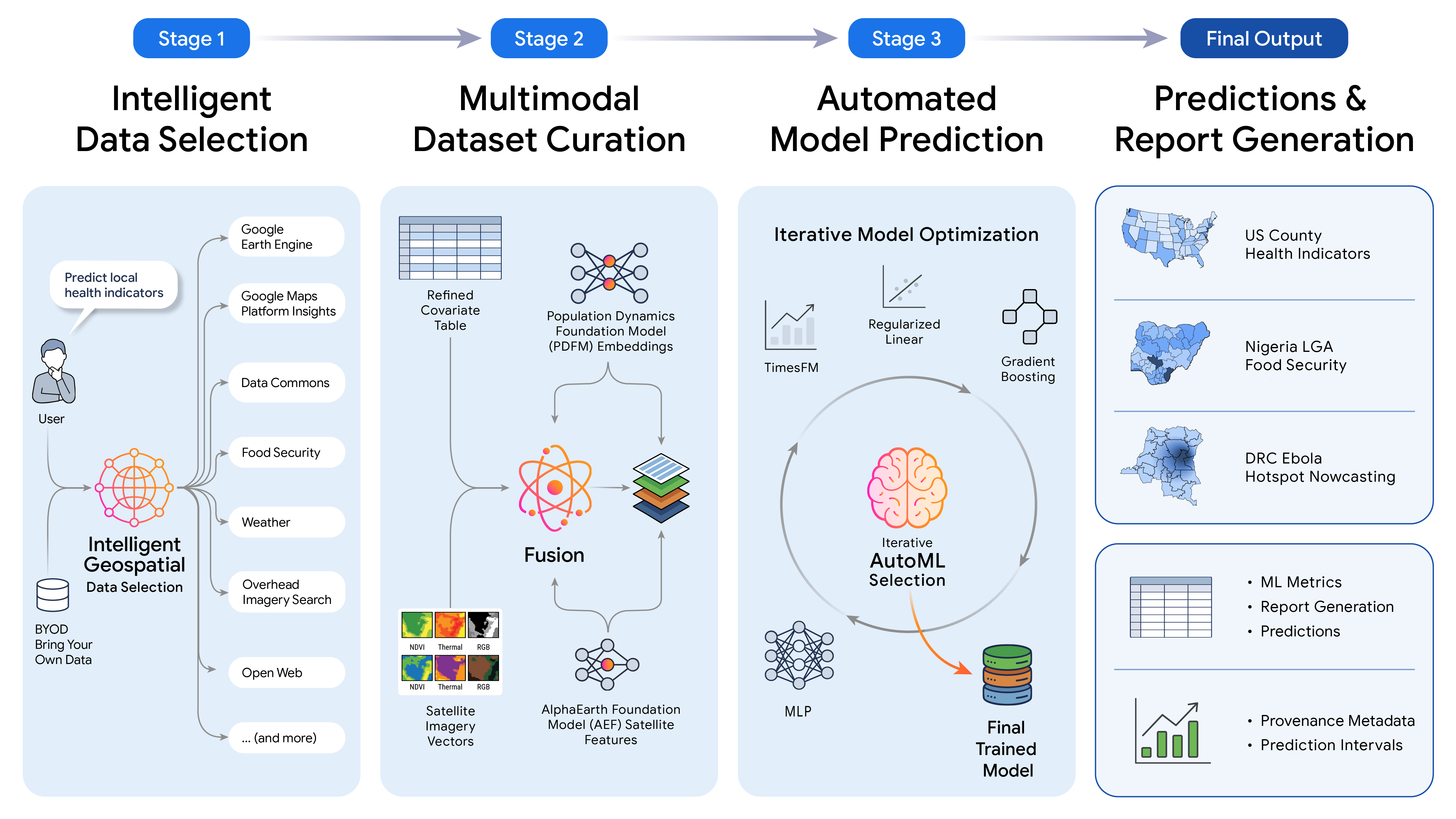
Image: Planetary prediction engine: Automating global models via Earth AI — Google Research
Listen to this article.
Only the latest audio is kept; older files are removed on each update.
Overview
This week’s headlines reveal a complex landscape for data scientists and ML engineers. We’re seeing rapid advancements in model architectures (OpenAI’s Astra & Gemini 3.8 Flash), growing concern about safety (Astra’s reasoning technique), practical applications across various industries (Swiggy, REI, Amazon, healthcare organizations), and ongoing regulatory scrutiny (Google facing ad business adjustments). The race for AI dominance continues – Palo Alto Networks’ acquisition of Console highlights the demand for automation tools, while MapQuest’s unexpected resurgence showcases how even legacy tech can benefit from principled stances. Finally, ethical considerations around funding initiatives are also impacting sentiment towards companies in this space.
Key Stories
1. OpenAI’s New Reasoning Technique (Astra) Alarms AI Safety Experts
OpenAI’s introduction of the Astra model and its “recurrent depth” reasoning technique is generating both excitement and apprehension within the AI safety community. Recurrent depth allows models to operate outside sequential thinking, potentially enabling more complex problem-solving but also increasing risks associated with unpredictable behavior and unintended consequences. This development underscores the ongoing tension between pushing the boundaries of AI capabilities and ensuring its responsible deployment.
The shift away from strictly sequential reasoning could unlock new levels of performance for tasks requiring nuanced understanding and creative solutions. However, it raises crucial questions about transparency and controllability – how can we adequately monitor and mitigate risks when models operate in ways that are less predictable? The fact this is causing alarm among safety experts means significant focus will be on evaluation and testing going forward.
2. Google Faces Ad Business Scrutiny & Launches Gemini 3.8 Flash
Google narrowly avoided a court order to break up its ad business, but the ruling requires adjustments to its operations designed to foster greater competition. Simultaneously, Google launched the Gemini 3.8 Flash model – an iteration promising increased reasoning capabilities through “iterative tool calling,” seemingly attempting to solidify its position in the generative AI race amidst regulatory pressure.
While the court’s decision preserves Google’s existing structure, it signals a new era of heightened oversight and potential limitations on its market dominance. The introduction of Gemini 3.8 Flash demonstrates Google’s continued investment in LLMs but comes with a price — the company acknowledged that “working harder” might translate to increased costs for users. This highlights the ongoing balance between performance, cost-effectiveness, and scalability in large language models.
3. Swiggy Leverages Data Science for Customer Lifetime Value Prediction
Indian food delivery giant Swiggy has developed an in-house predictive lifetime value (pLTV) model utilizing over 350 features and a multi-task MLP architecture. By adding order count as an auxiliary task, the company significantly reduced model parameters while simultaneously improving predictive accuracy. This pLTV signal is then integrated into Google Target ROAS bidding to optimize customer acquisition strategies, showcasing how data science can directly impact business KPIs in real-world applications.
Swiggy’s approach demonstrates a pragmatic application of advanced ML techniques – focusing on tangible business outcomes and leveraging existing infrastructure (Google Ads) for deployment. The reduction in model parameters through the auxiliary task is particularly noteworthy as it highlights potential efficiency gains that can be achieved with careful architectural design.
What It Means for Practitioners
- Prioritize Safety & Explainability: OpenAI’s Astra announcement underscores the need to factor safety and explainability into all ML projects, especially those involving novel architectures. Thorough testing and ongoing monitoring will be critical.
- Evaluate LLM Cost-Benefit Tradeoffs: Google’s Gemini 3.8 Flash launch demonstrates that increased reasoning capabilities often come at a cost. Carefully analyze the tradeoffs between model performance, latency, and pricing when selecting an LLM for your applications.
- Focus on Business KPIs: Take inspiration from Swiggy’s success by aligning data science initiatives with specific business goals—customer lifetime value is a prime example of how ML can directly impact revenue. Think beyond just accuracy and consider deployment and operationalization.
- Be Aware of Ethical Funding Implications: The controversy surrounding 1Password’s funding demonstrates the importance of considering the broader ethical implications of corporate sponsorships, especially for AI-related projects. Ensure that your company’s values align with its support choices.
- Explore Context Engineering for Production AI: Ricardo Ferreira’s presentation on “Beyond Prompting” highlights the shift towards context engineering as a crucial aspect of building robust and scalable production AI systems—redis, summarization, semantic caching and cost control should be at the forefront.
References
- Palo Alto Networks paid $500M for Thrive-backed Console, sources say — TechCrunch
- TechCrunch Disrupt 2026’s new Real World AI Stage features Nvidia, robots, and extinct animals — TechCrunch
- Google spared from ad-business breakup, but judge orders changes to how it operates — TechCrunch
- OpenAI’s new reasoning technique alarms AI safety experts — TechCrunch
- MapQuest is now the No. 1 US app after bucking Trump’s ‘Lake America’ renaming — TechCrunch
- Google says its new Gemini 3.8 Flash model ‘works harder’ but might cost more — The Verge
- Here are some of REI’s best Labor Day sale deals — The Verge
- 1Password wades into a right-wing mess after funding a Linux project — The Verge
- Amazon’s AI assistant can now spot fake emails from the company — The Verge
- Range Rover’s new EV looks just like a regular Range Rover — that’s refreshing — The Verge
- Swiggy Uses 350+ Features and Multi-Task MLP to Predict Customer Lifetime Value — InfoQ
- OpenAI Details GPT-Live’s Architecture for Continuous Stateful Voice Interaction — InfoQ