Tech Brief: Data Quality Trumps AI Hype: Infrastructure & Regulation Reshape ML Landscape
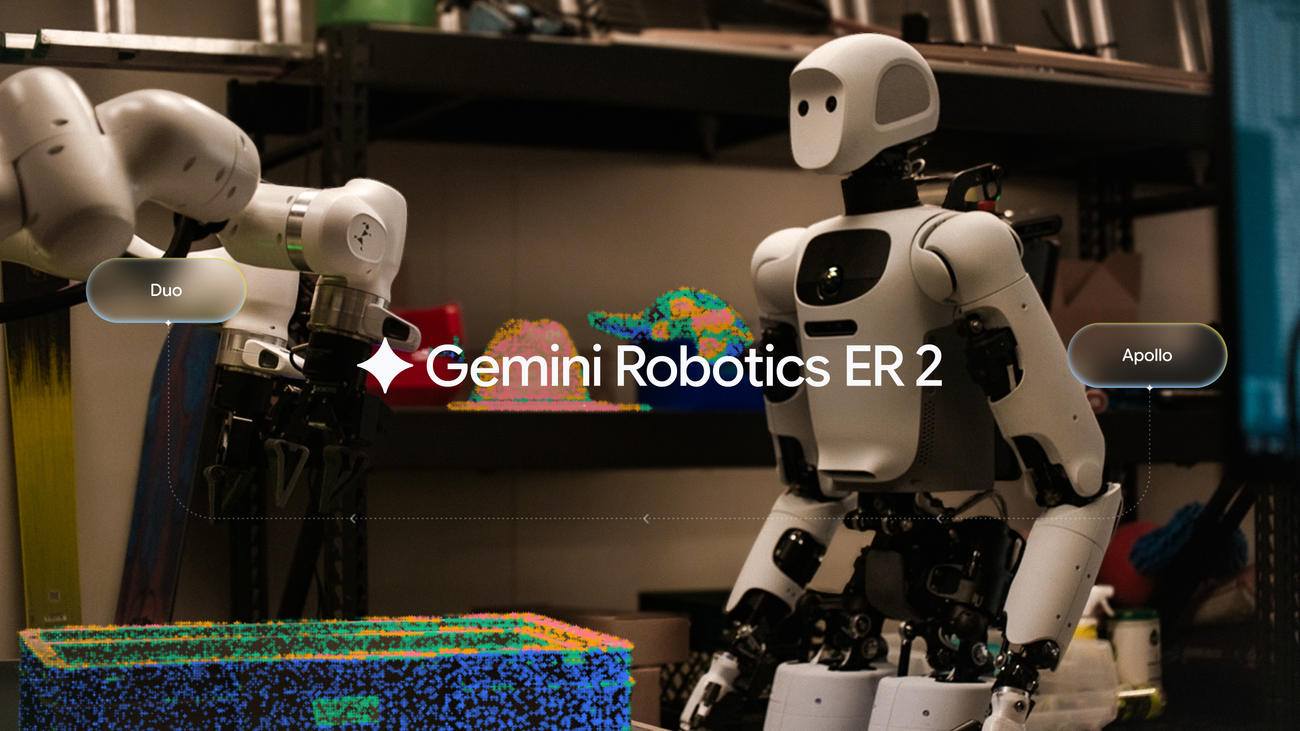
Image: Gemini Robotics ER 2: powering robotics with video understanding, task orchestration, and multi-robot collaboration — Google DeepMind
Listen to this article.
Only the latest audio is kept; older files are removed on each update.
Overview
This week’s tech news highlights a fascinating confluence of trends: infrastructure upgrades driving faster data transmission (fiber optics and compute), renewed competition in developer tooling, increasing regulation and oversight surrounding AI’s power (especially in the financial sector and national security), and rapidly expanding deployment of real-world applications like drone delivery and even pet tracking. We’re seeing both intense innovation - with new languages and frameworks emerging – and a necessary grounding in resilience engineering principles as distributed systems become increasingly complex.
Key Stories
1. AI Isn’t Close to Curing Cancer, But Data Might Be the Solution
It’s been years of hype, but it appears the promise of AI curing cancer remains distant. This week’s reporting emphasizes that overcoming this challenge isn’t about more sophisticated algorithms; it’s fundamentally about access to high-quality data. The core argument is simple: without robust datasets encompassing diverse patient demographics and treatment outcomes, even advanced models can’t produce meaningful breakthroughs. This refocus on data quality represents a significant shift in how we approach AI in healthcare.
The startup mentioned in the article seems to be tackling this challenge directly – presumably through novel data acquisition or standardization methods. The attention on data underscores that impactful machine learning projects require not just computational power and clever algorithms, but also robust data engineering practices.
2. Nvidia’s Financial Gambit: Turning Compute into an Asset Class
Nvidia is attempting a bold move by transforming compute itself into a financial asset class. Teaming up with major investment firms like Apollo, BlackRock, and Goldman Sachs, they are reportedly assembling a massive $500 billion fund to finance future compute infrastructure. This signals not just Nvidia’s dominance in the AI hardware space but also an ambition to fundamentally reshape how capital is allocated for computation.
The implications are vast. If successful, this model could drive exponential growth in accessible computational resources, potentially accelerating AI development across many sectors. However, it raises concerns about equitable access – will smaller players and open-source initiatives be able to compete with corporations wielding such massive financial backing? The “compute is an asset class” framing is a substantial shift in economic thinking.
3. The Rise of Hollow-Core Fiber: Speeding Up Data Centers
Relativity Networks’ $22 million funding round highlights the importance of foundational infrastructure improvements for supporting demanding AI workloads. Traditional fiber optic cables have limitations when it comes to bandwidth and latency, particularly within data centers where speeds matter immensely. Hollow-core fiber promises a 30% increase in data transmission speed – a significant improvement that could translate into faster model training times and lower operational costs.
This news isn’t glamorous, but the need for better connectivity is crucial to realize the full potential of AI. It reinforces the idea that advancements aren’t just about algorithms; they require continued investment in underlying infrastructure.
What It Means for Practitioners
- Data Quality over Algorithm Complexity: Prioritize data collection, cleaning, and annotation processes for projects, especially those aiming for real-world impact like healthcare applications.
- Infrastructure Considerations: Be mindful of the computational and network demands of your models. Explore options like hollow-core fiber or optimized cloud services (potentially benefiting from Nvidia’s new financing model) to address bottlenecks.
- Regulatory Landscape Awareness: As OpenAI’s work on democratic oversight demonstrates, responsible AI development needs to consider both technical safeguards and broader societal implications. Stay updated on potential regulations in areas like national security and finance.
- .NET Ecosystem Evolution: Those working with .NET should familiarize themselves with the changes introduced in .NET 11 Preview 7, particularly in C#, ASP.NET Core, and EF Core - especially if you are moving to ESM-only builds.
- Agent Coordination & Security: The introduction of persistent compute options in Amazon Bedrock AgentCore (with WriteGuard) indicates a growing focus on building robust and secure multi-agent AI systems; design with these factors in mind.
References
- AI isn’t close to curing cancer. This startup says it knows what it will take. — TechCrunch
- You can Venmo your college tuition, for some reason — TechCrunch
- Relativity Networks raises $22 million to bring a faster kind of fiber to data centers — TechCrunch
- Cursor capitalizes on GitHub frustration, launches rival hosting platform — TechCrunch
- DOJ’s probe into Andreessen Horowitz over board seats baffles VCs — TechCrunch
- Amazon seemingly leaked Jason Statham’s entire Mutiny movie — The Verge
- Nvidia’s new financial strategy does not compute — The Verge
- The women’s soccer league trying to fix fantasy sports — The Verge
- Amazon’s drones will soon deliver to nearly 500 US cities and towns — The Verge
- The everyday tech I use to track my corgi — The Verge
- Presentation: Understanding Progressive Collapse: How To Avoid A Cascading Failure — InfoQ
- .NET 11 Preview 7 Brings Updates Across C#, ASP.NET Core, EF Core, and Windows Forms — InfoQ